
Matsushima: A Slow Journey Along Japan’s Pine Islands
A personal journey through Matsushima, Miyagi Prefecture, exploring quiet islands, oyster shacks, temples and the slower rhythm of Japan’s northern coast.

Located along the coast of Miyagi Prefecture in northern Japan, Matsushima has held a special place in the hearts of locals for centuries. Counted among the Nihon Sankei (The Three Scenic Views of Japan), alongside Amanohashidate and Itsukushima Shrine, it’s a landscape often admired, often spoken of, almost drifting somewhere between reality and legend. And yet, for many foreign travelers, it remains surprisingly unknown.
Matsushima carries a quiet wabi-sabi charm—nothing feels polished or forced. Even the famous Edo-period poet Matsuo Basho, in The Narrow Road to the Deep North (Oku no Hosomichi), struggled to fully describe its beauty, choosing instead to leave much of it implied rather than explained
Just under an hour from Sendai, Matsushima makes for an easy day trip. Still, its slower pace rewards staying longer. Here is a small attempt to see it for myself and understand what has kept this place close to people for so long.
A Slow Journey North
[
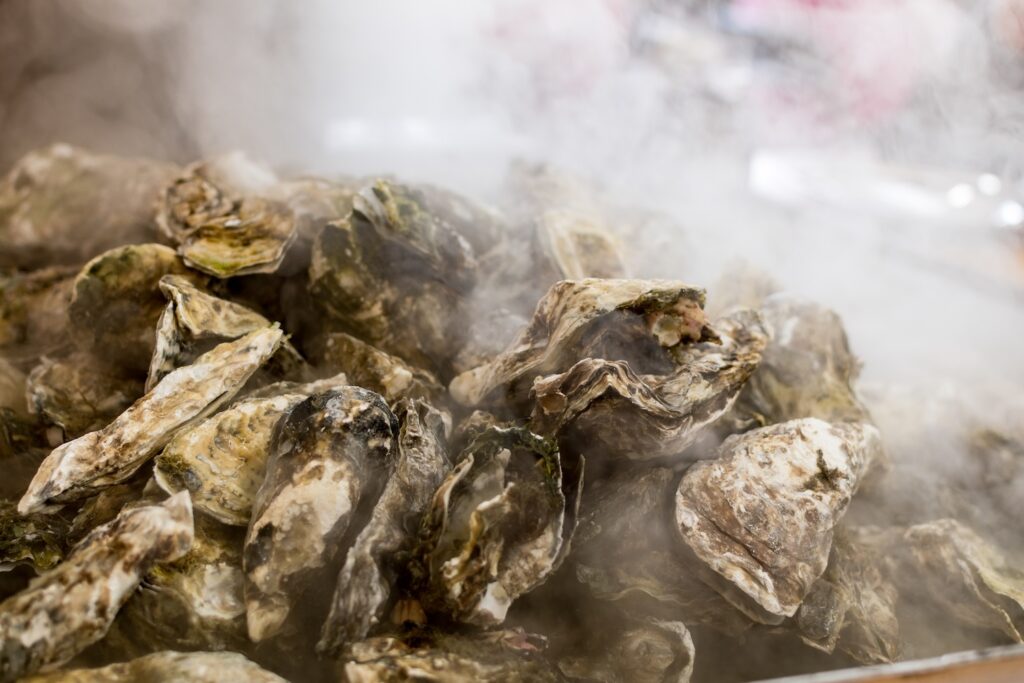
](http://cdn.gaijinpot.com/app/uploads/sites/4/2026/05/Pixta-KazuA-oyster-miyagi-japan-Matsushima.jpeg)Matsushima is famous for its views and oysters.
I left Tokyo on a clear, cold morning in early March. The Shinkansen carried me quickly, almost too quickly, toward Sendai. But from there the rhythm shifted. I took a local train on the Sensei line. It moved at a leisurely pace, as the beautiful view of the coast slowly receded from its large windows. Then, finally, I reached Matsushima Kaigan station.
Right outside the station, I went into a cafe. Not just for the coffee, but also because cafes in Japan feel like part of the journey. From the second floor, the deep blue bay stretched out in front of me. The water wasn’t as still as it first seemed. The wind brushed across it, breaking the surface into small shifting patterns. Pine-covered islands stood scattered in the distance.
I ended up staying longer than I meant to. Watching, without really thinking about time. The cafe stopped feeling like a quick pause; it felt like the beginning of Matsushima itself.
Following the Coastline
[

](http://cdn.gaijinpot.com/app/uploads/sites/4/2026/05/scattered-islets-across-the-bay-Matsushima.jpg)Scattered islets across the bay.
I started on foot. Matsushima is best understood slowly—sanpo (a gentle walk), not sightseeing in a rush.
The coastline led me toward Oshima Island, reached by a simple red bridge. It’s a small place, but its past runs deep. For centuries, this place has been a site of pilgrimage for spiritual retreats. It is said that a monk named Kenbutsu spent years in seclusion at the ruins of Kenbutsudo, studying sutras (Buddhist scriptures), and that his story gradually became a legend. It is also said that an emperor, upon hearing of his bravery and dedication, sent a gift of a thousand pine saplings. Thus, the place became known as Matsushima (Pine Islands).
From there, I walked toward the Matsushima island tour boat pier and boarded a sightseeing boat. Tickets are easy to sort out on the spot, or you can reserve them in advance. I picked a simple round-trip, no reservation, just the next departure and a paper ticket in hand.
The boat moved gently through the bay, weaving past islets shaped by time and tide. Over 200 of them, each slightly different. Some sharp, some rounded, all crowned with wind-shaped pines.
The 2011 tsunami reached this coast, but Matsushima did not suffer the same level of damage as many other places. Some edges of the smaller islands have worn down. A few trees are gone, and parts of the shoreline have changed. But the scattered islets across the bay helped break the force of the waves, softening their impact before they reached the land.
Temples, Bridges and the Sea
[

](http://cdn.gaijinpot.com/app/uploads/sites/4/2026/05/Supyan-PIXTA-Fukuura-Bridge-miyagi-japan-Matsushima.jpeg)Fukuura Bridge
Back on land, the path led me to Godaido Temple, sitting quietly on a small rocky islet just off the shore. It is the oldest example of Momoyama-period architecture and is designated as a National Important Cultural Property. Rebuilt in the early 1600s under Date Masamune. Even now, it feels more like a lookout than a temple, open on all sides, facing the sea.
The bridge, sukashi-bashi (see-through bridge), makes you pay attention. The spacing of the wooden planks reveals the water below, forcing you to slow down with every step.
Godaido has long been a symbol of Matsushima. You’ll see it appear repeatedly in old woodblock prints—small, almost understated, framed by pines and water or covered in snow. Even in those works, it isn’t the main subject so much as part of the whole scene, quietly holding its place.
From there, I made my way to Fukuura Bridge, the long vermilion span stretching out across the water. It leads to Fukuurajima, a small island with walking paths, quiet viewpoints, and pockets of trees that open now and then to the bay.
By late afternoon, the cold had settled deeper. I found a seafood restaurant near the shore, drawn in by the smell before anything else.
The owner, an aged woman, recommended kaki (oysters)
—ma ga ichiban (best right now), she said*.*
They arrived grilled, still in their shells. Smaller than I expected, but dense and rich. The taste was clean, almost sweet, carrying the sea without overpowering it.
She asked where I had come from.
“Tokyo.”
“Ah,” she laughed, “then this must feel slow.”
She wasn’t wrong.
That evening ended early. A quiet hotel, the faint sound of the ocean outside and a kind of stillness that cities rarely allow.
A Day from Market to Museum
[

](http://cdn.gaijinpot.com/app/uploads/sites/4/2026/05/Entrance-of-Zuiganji-miyagi-japan-Matsushima.jpeg)Entrance to Zuiganji.
The next morning started early at the Shiogama Fish Market, watching the tuna auction. The largest shipment of maguro tuna in Japan arrives at Shiogama Port. You can experience the tuna and seafood auction from the second-floor observation deck. It is free. You can also enjoy making your own kaisendon (seafood rice) bowl for breakfast.
Later, I went to Zuiganji Temple. Tall cedar trees lined the path on both sides. They blocked the view of the sea behind them. Zuiganji dates to the Heian period. It’s considered one of the most important Zen temples in the region. The rooms are simple but carefully designed. They feature gold-leaf sliding doors, painted panels and smooth wood that reflect soft light.
Upon entering the Matsushima Retro Museum, my next destination, I felt as if I had stepped back into the Showa era. Old tin toys, movie posters, schoolbooks and those everyday items that people once used without much thought. The atmosphere was made real without any extra decoration, as if fragments of the past had been carefully pieced together.
By the time lunch came around, I was hungry enough to stop without thinking twice. From a street-side restaurant, I ordered unagi (grilled eel). Matsushima’s food comes straight from the bay and the coast around it: oysters in the colder months, conger eel in summer, and dishes that change with the season.
That’s how Matsushima stayed with me, not as one big moment, but as a series of quiet ones. The walk to Oshima, the boat drifting past scattered islands, short crossings over red bridges, tuna auction experience and the unforgettable taste of the sea at the table.
How to Get to Matsushima
[

](http://cdn.gaijinpot.com/app/uploads/sites/4/2026/05/iStock-Spuyan-Miyagi-Japan-Matsushima.jpeg)Discover Miyagi.
Matsushima is located in Miyagi Prefecture, about 40 minutes northeast of Sendai.
From Tokyo, take the Tohoku Shinkansen to Sendai Station (around 90 minutes), then transfer to the JR Senseki Line bound for Matsushima Kaigan Station. The local train ride takes roughly 40 minutes.
Matsushima also works well as a day trip from Sendai, though staying overnight allows you to experience the area after the crowds thin out in the evening.
Winter is considered the best season for oysters, while spring and autumn offer milder weather and quieter coastal walks.
Have you found a destination that reveals itself slowly like Matsushima?
Note: This article content is being automatically formatted. For the original source formatting, visit the link below.
Original source:GaijinPot Blog ↗
More Japan News

CineYama: A Foreigner-Built Theater Inside an Abandoned Kindergarten
Learn how a foreign turned an abandoned kindergarten in rural Yamanashi into CineYama, one of Japan’s most unique indie cinemas.

Japanese Language Proficiency & Residency
Japan is considering new language requirements for permanent residency. This could impact long-term stays and visa applications.

Japan Joint Custody Law Explained for Foreign Parents
Japan’s new joint custody law is changing divorce in Japan. Here’s what foreign parents need to know and why critics are concerned.