
CineYama: A Foreigner-Built Theater Inside an Abandoned Kindergarten
Learn how a foreign turned an abandoned kindergarten in rural Yamanashi into CineYama, one of Japan’s most unique indie cinemas.

Finding CineYama almost feels like you are not supposed to. Hidden deep in the hills of Uenohara, Yamanashi Prefecture, the independent movie theater sits inside a former Japanese kindergarten surrounded by trees, bamboo groves and narrow roads.
In a country where many rural towns are losing businesses, schools and community spaces altogether, CineYama feels like a rare exception, an abandoned building brought back to life through a love of film.
At first glance, the building still looks almost exactly like a Japanese yochien (kindergarten). The playground remains intact, small handwashing stations still line the outside walls and the structure feels frozen in another era. Only the large film reel mounted near the top of the building hints that something unusual is happening here.
Yet tucked away in this corner of Yamanashi is one of Japan’s most charming independent cinemas.
Inside a Former Japanese Kindergarten
[
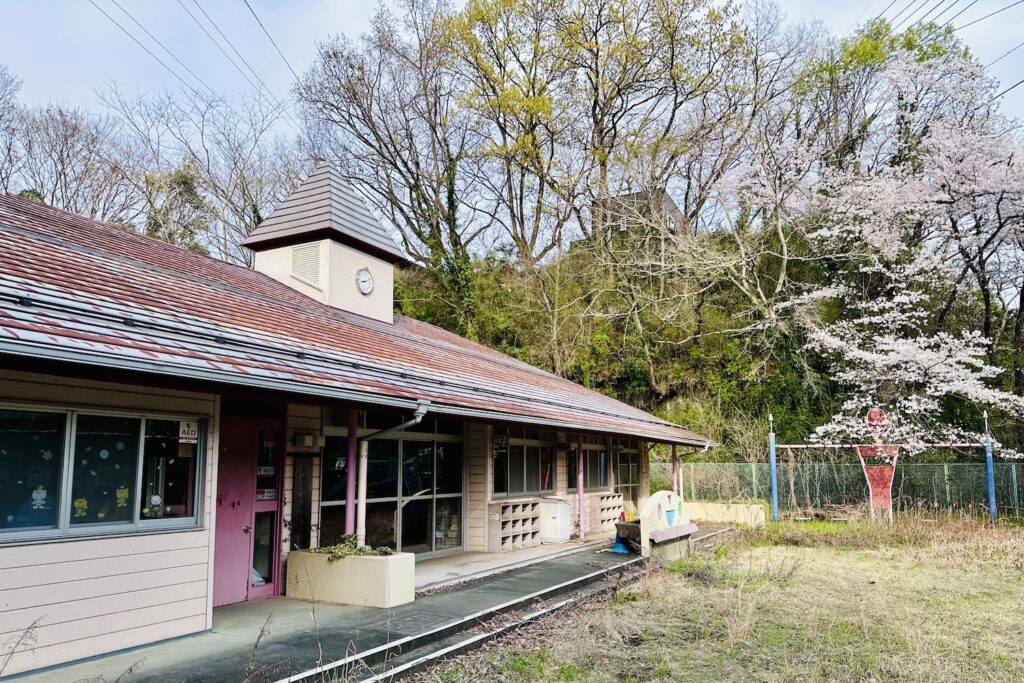
](http://cdn.gaijinpot.com/app/uploads/sites/4/2026/05/Cineyama-yamanashi-yochien.jpg)The state of the original kindergarten.
For founder Matthew Kelson, the location felt cinematic from the start.
“The first time I walked through the tunnel at its base and up the cherry tree-lined hill and saw the building and its clock tower, it seemed like I had discovered something straight out of Spirited Away,” he said.
[
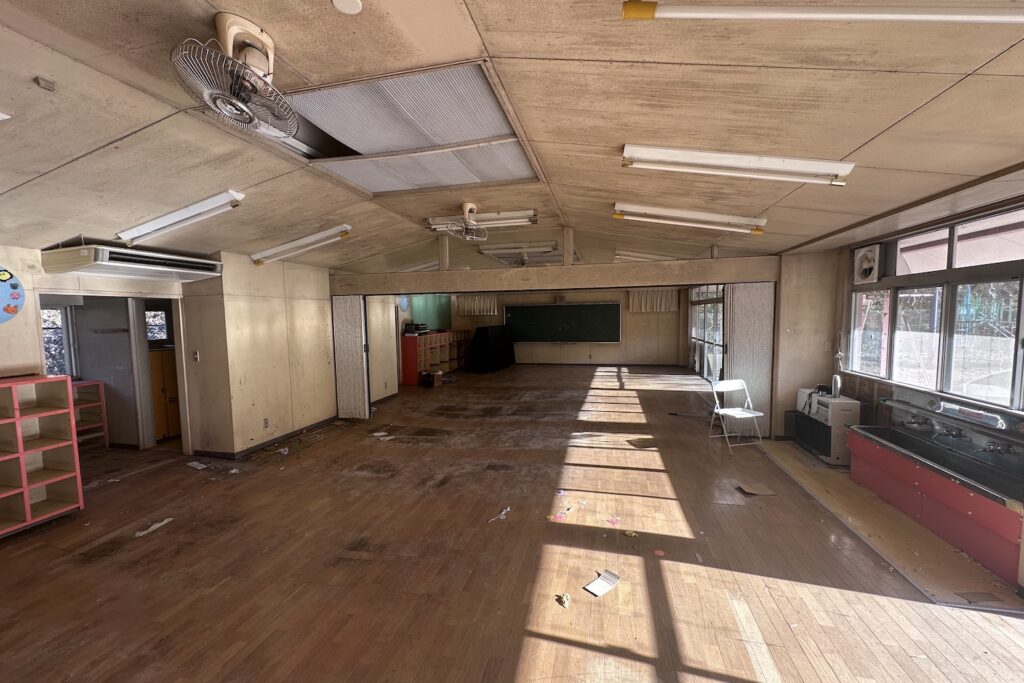
](http://cdn.gaijinpot.com/app/uploads/sites/4/2026/05/Cineyama-yochien-yamanashi.jpg)The interior of the original school.
CineYama occupies the former Sawamatsu Kindergarten, a retired yochien that Kelson spent two years transforming into a functioning theater. The setting feels strangely dreamlike.
The roads gradually narrow, the hills become steeper and the sounds of the city slowly disappear. Even local taxi drivers seemed surprised when I asked to go there.
Kelson previously helped build an independent theater inside a former school building in Detroit during his college years. When he discovered the abandoned kindergarten in Yamanashi, he immediately recognized something familiar.
“I think schools and cinemas are both places of imagination,” he explained. “There is a lot of synergy between them.”
That atmosphere continues inside the screening room.
CineYama avoids the oversized multiplex experience most moviegoers are used to. Instead, the theater feels intimate and personal, like a private screening room built by someone obsessed with film.
Not Your Normal Movie Theater
[

](http://cdn.gaijinpot.com/app/uploads/sites/4/2026/05/Cineyama-popcorn.jpeg)Essential snacks for any theater.
Inside the theater, it becomes immediately obvious that Kelson is both a diehard film lover and audiophile. Vintage posters line the walls while carefully imported audio equipment gives the screening room a warmth rarely found in larger commercial theaters.
Kelson even shipped much of the theater’s equipment to Japan via freight from Detroit, including vintage Altec A7 “Voice of the Theatre” speakers once used in American cinemas during the 1950s.
“All in all, it took about six months from Detroit to Yamanashi,” Kelson said. “But the first time the Altecs filled the cinema, it was worth it.”
[
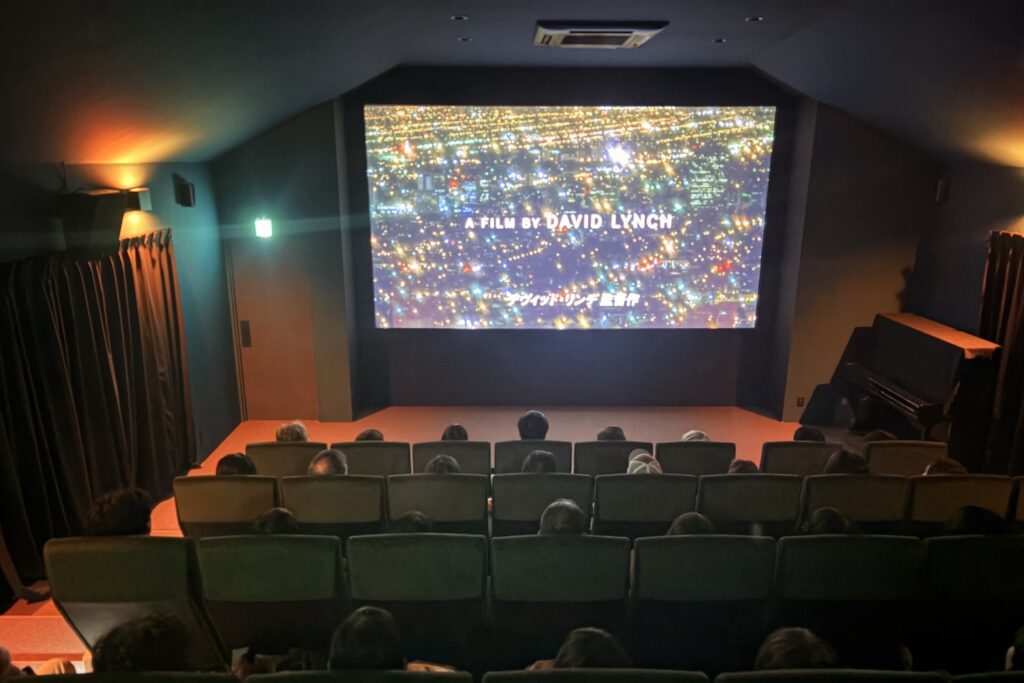
](http://cdn.gaijinpot.com/app/uploads/sites/4/2026/05/Cineyama-cinema-yamanashi.jpg)Only the classics.
The snack counter feels similarly modest but charming. Instead of the oversized concession stands major cinema chains rely on, CineYama serves popcorn with customizable seasoning options in a space that feels more homemade than corporate.
During my visit, Kelson’s wife tended to the playground and surrounding grounds while their young daughter enthusiastically helped hand out snacks and tickets. More than an independent cinema, CineYama feels like a family project slowly bringing an abandoned space back to life.
Kids can play outside while their parents disappear into a moody David Lynch screening for two hours.
The audience reflected that same balance. I spotted college students, older couples and local residents filtering in before the screening. CineYama also offers discounted admission to Uenohara residents, another small sign that the theater wants to become part of the community rather than exist as a niche destination.
Spaces Like This Matter
[
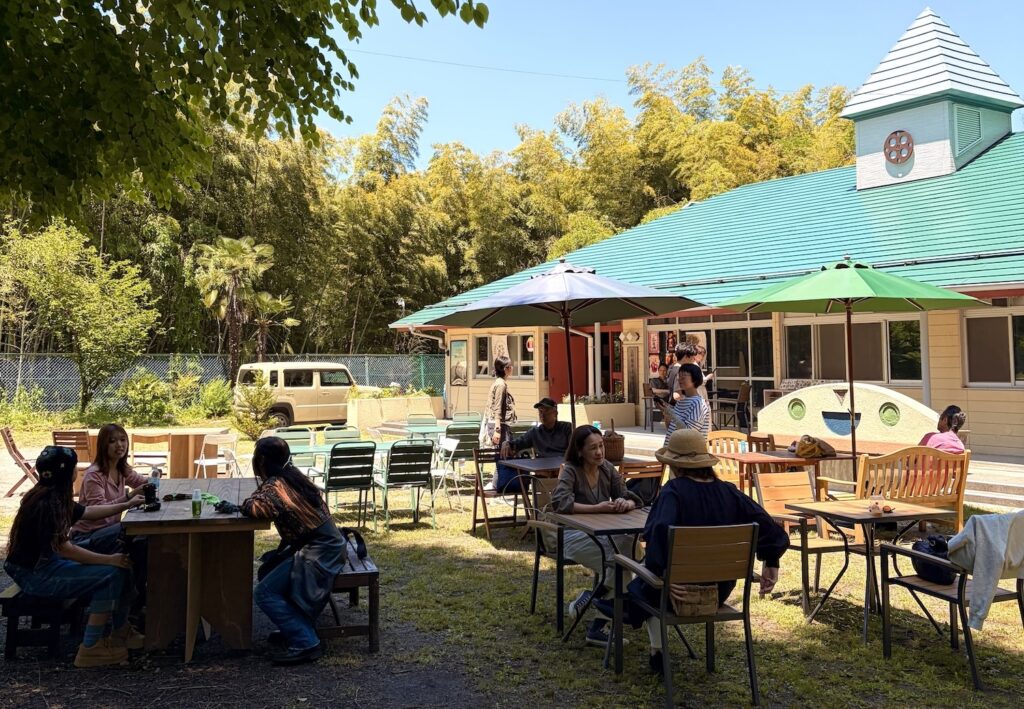
](http://cdn.gaijinpot.com/app/uploads/sites/4/2026/05/Cineyama-yamanashi.jpeg)The community response has been positive.
Yamanashi Prefecture, located west of Tokyo, is best known for mountains, vineyards and views of Mt. Fuji. But like many regional parts of Japan, smaller communities there are also dealing with aging populations, disappearing businesses and the gradual loss of communal gathering spaces.
Local cinemas, in particular, have steadily disappeared across Japan over the past few decades, replaced by streaming services and multiplex chains concentrated in larger cities.
That is part of what makes CineYama feel important. Kelson described modern streaming culture as increasingly isolating, arguing that physical movie theaters still offer something algorithms cannot.
[

](http://cdn.gaijinpot.com/app/uploads/sites/4/2026/05/Matthew-cineyama-yamanashi.jpeg)Matthew Kelson brought new life to a former kindergarten in Uenohara.
“Watching a great film lets you experience what it’s like to be a different person entirely,” he said. “Especially now when we’re becoming more and more isolated inside our own algorithmic loops online.”
The local response has been overwhelmingly positive.
“Parents in particular who had moved out of Tokyo to live in the countryside had given up that side of themselves, of seeing a movie, many years before and this was giving them that back,” Kelson said.
Some former kindergarten students have even returned to see films there, experiencing the building in an entirely new way.
And occasionally, the silence surrounding CineYama is broken by the sound of an express train blasting through the valley, stopping nowhere along the way. It feels like a reminder of how easy it is for places like this to be passed by.
A Cinema Worth Traveling For
[

](http://cdn.gaijinpot.com/app/uploads/sites/4/2026/05/Cineyama-in-Yamanashi.jpeg)Rebuilding something new.
Part of CineYama’s charm is that it does not feel convenient. The hidden location and the quiet atmosphere all become part of the experience itself. It feels worlds away from Tokyo despite being reachable as a day trip from the city.
In an era where more experiences happen alone and online, CineYama feels almost stubbornly human. It is not just a movie theater tucked away in rural Yamanashi, but a reminder that old spaces can still find new life when enough people care about keeping them alive.
Getting There
CineYama is located in Uenohara, Yamanashi Prefecture, roughly an hour west of central Tokyo via the JR Chuo Line. From Uenohara station, visitors can reach the theater by a quick 5-minute taxi ride.
For visitors already heading west of Tokyo, CineYama also makes an easy addition to a Mt. Takao day trip. After spending the morning hiking crowded trails and eating at Takao’s busy tourist areas, arriving at CineYama feels noticeably quieter and slower.
For screening schedules and updates, check CineYama’s official website or Instagram before visiting.
Note: This article content is being automatically formatted. For the original source formatting, visit the link below.
Original source:GaijinPot Blog ↗
More Japan News

Ghosts of Sekigahara: A Haunting Visit to Japan’s Bloodiest Battlefield
The Sekigahara battlefield was the site of Japan’s most decisive samurai battle. Today, the quiet town still feels haunted by history.

Japan Joint Custody Law Explained for Foreign Parents
Japan’s new joint custody law is changing divorce in Japan. Here’s what foreign parents need to know and why critics are concerned.

2026 Top Jobs in Japan Week 20
Apply to open roles in hospitality and construction in this week's Top Jobs in Japan!