
Ghosts of Sekigahara: A Haunting Visit to Japan’s Bloodiest Battlefield
The Sekigahara battlefield was the site of Japan’s most decisive samurai battle. Today, the quiet town still feels haunted by history.

The Sekigahara battlefield remains one of the most important historical sites in Japan. I live in the Tokai region in central Japan. A manufacturing hub, it’s not much to look at, and with Nagoya as its main metropolis—a city often jokingly described as having nothing worth seeing—the area doesn’t get as many tourists as other parts of the country.
Even though I live here and know that there’s more to see than Instagram or TikTok would have you believe, I still find myself forgetting this. This is doubly true for history, as Tokai was ground zero for the twists and turns of the Sengoku Jidai, the Warring States Period that saw local warlords battling to unite the country under a single banner.
Those 150 years came to an end at Sekigahara, an open valley at the far end of what is now Gifu Prefecture, where the combined armies of the east and west met on October 21, 1600, to decide who would rule Japan: Tokugawa Ieyasu or Toyotomi Hideyori, the son of the deceased Hideyoshi.
Sekigahara: Now and Then
[
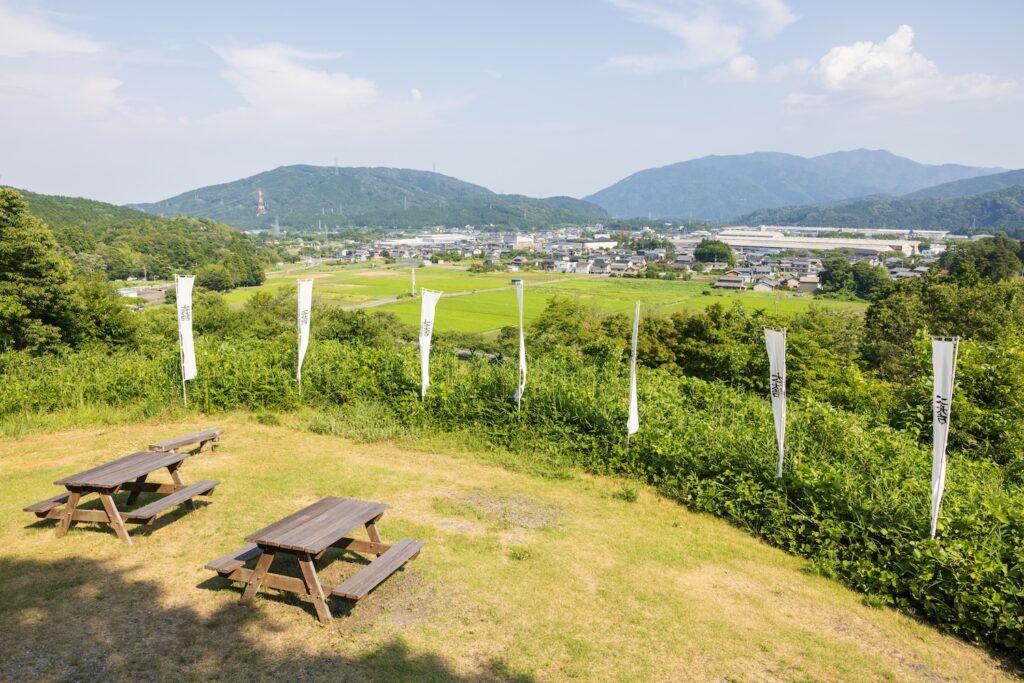
](http://cdn.gaijinpot.com/app/uploads/sites/4/2026/05/Pixta-okuken-Sekigahara-Gifu-Japan.jpeg)Thousands of soldiers died here.
As a fan of Japanese history, I had long wanted to visit Sekigahara. Every year around my winter birthday, I would say, “This is the year,” only to decide it was better to wait for warmer weather. This year, however, I finally went. While the town had less to see than I expected, the experience of being there was still overwhelming.
Nowadays, Sekigahara is a small town of around 7,000 people. More than 400 years ago, however, roughly 150,000 soldiers gathered on these same plains beneath hundreds of clan banners. Historical estimates vary widely, but tens of thousands are believed to have died during and after the battle.
To put that scale into perspective, around 4,700 soldiers died at Waterloo and roughly 7,000 at Gettysburg, both battles remembered for their heavy losses.
[

](http://cdn.gaijinpot.com/app/uploads/sites/4/2026/05/Sekigahara_Kassen_Byobu-zu_Gifu_History_Museum.jpg)Edo period screen depicting the Battle of Sekigahara.
It is strange to stand in such a quiet place and imagine the chaos that once unfolded there. Today, the valley is filled with rice fields, narrow roads and scattered homes beneath the surrounding mountains.
Beyond the valley rises Ibukiyama, overlooking the same plains where the armies once gathered more than 400 years ago. In the early morning, it is not hard to picture soldiers slowly appearing over the hills, armor glinting through the fog as war horns echoed across the valley.
Stepping off the train at the small, unmanned station, I was surprised that such a historic battle could have taken place there. Sekigahara looks like any other small town in Japan. If not for the many clan battle flags flapping in the breeze along the main road and pictures of samurai on every available surface, I might have thought that I had gotten off at the wrong stop.
Reliving the Battle
[

](http://cdn.gaijinpot.com/app/uploads/sites/4/2026/05/Pixta-kazukiatuko-Gifu-Sekigahara-Battlefield-Memorial-Museum.jpeg)Gifu Sekigahara Battlefield Memorial Museum
Although I like Japanese history and was aware that a battle took place at Sekigahara, I didn’t know the particulars, so my first stop was the Gifu Sekigahara Battlefield Memorial Museum. After a few confusing minutes, I wasn’t even sure I had come to the right place. The word “museum” didn’t appear on any of the signage, either in Japanese or English. Eventually, I bought my ticket and got in line for the theater, the building’s main entry point.
The museum, which opened in 2020, is surprisingly impressive. The theater includes two areas. The first is a bird’s-eye-view experience with film projected onto the floor, showing the movements of the various armies and their skirmishes across the valley. The second is the main theater itself, which features a short animated film depicting the battle from the ground.
Although I’m prone to over-stimulation, the 4D-style shaking seats and fan-blown wind helped pull me into the experience. For a few moments, it felt less like watching history and more like standing in the middle of it. I left with a much clearer understanding of how the battle unfolded.
Echoes of the Battle
[
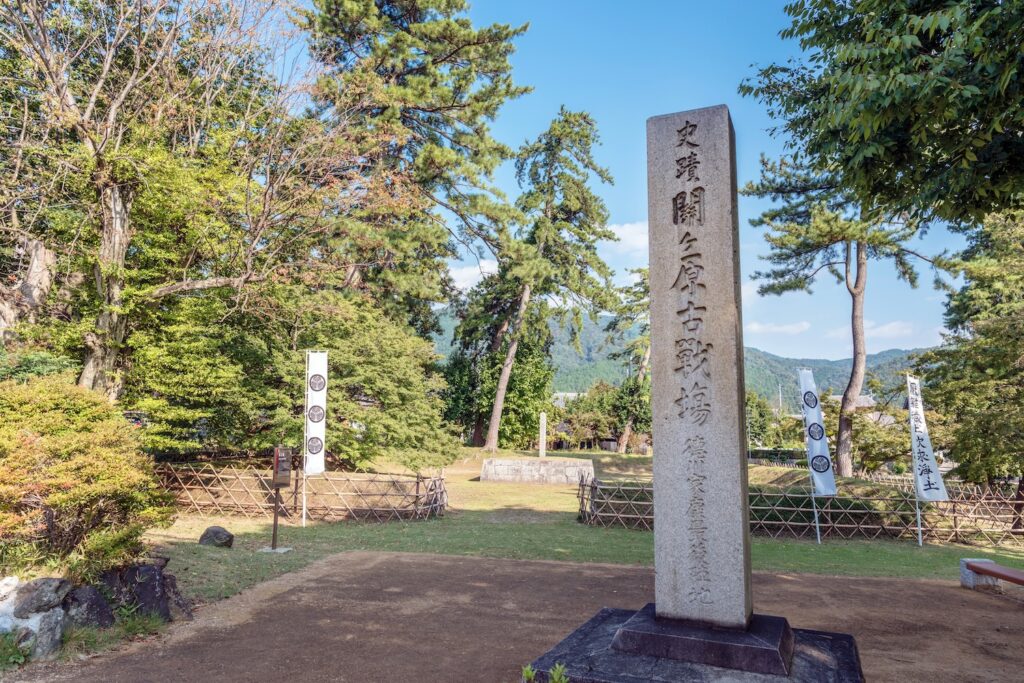
](http://cdn.gaijinpot.com/app/uploads/sites/4/2026/05/Pixta-m.Taira-Sekigahara-Gifu-Tokugawas-final-encampment.jpeg)Tokugawa’s final encampment.
Although there are a few other attractions in town, including the Samurai Armor Museum and Sekigahara Warland—an open park filled with concrete statues of warriors fighting—I opted instead to wander around and take in the atmosphere.
My first stop was Tokugawa’s final encampment, located beside the museum. According to the signs, this is where he inspected the severed heads of his enemies after the battle.
Another place I visited was the East Head Mound, one of two burial sites where Tokugawa’s soldiers piled the heads they collected that day. Both places were stark reminders that this was not just the site of a famous battle, but of bloody and deeply human deaths.
Historical accounts differ on the exact number of casualties, but the scale of the loss was enormous. Thousands of soldiers died across these fields in just a few hours. Standing there now, surrounded by quiet farmland and distant mountains, it becomes difficult to comprehend the violence that once consumed the valley. Where did they bury them all? How do you even carry out such a grisly and gargantuan task?
Walking the Battlefield
[

](http://cdn.gaijinpot.com/app/uploads/sites/4/2026/05/Pixta-Buuchi-Sekigahara-Battlefield-Ishida-Mitsunaris-Camp-Site.jpeg)Ishida Mitsunari’s Camp Site.
I thought about this as I walked through the rice fields. These paddies must have been here then, too, I thought. Four centuries ago, the valley would have looked different, but not entirely unfamiliar.
There would be mist hanging low over the fields, narrow paths cutting through the wetlands and thousands of armored soldiers gathering beneath clan banners as drums and war horns echoed through the hills.
Tokugawa later ordered his men to rebuild the shrines destroyed in the battle, but the land itself still feels marked by what happened there. I climbed up a hill to the spot where Ishida Mitsunari, the leader of the losing side, watched as his plans slowly fell apart.
Looking out, I could see the modern houses and streets and the Tokaido Shinkansen line in the distance. I guess people must have lived here then, too. How would it feel to see 150,000 soldiers arrive in your village? It must have felt like the end of the world.
Spirits and The Drums of War
[

](http://cdn.gaijinpot.com/app/uploads/sites/4/2026/05/Pixta-Sekigahara-Battlefield-Ishida-Mitsunaris-Camp-.jpeg)Ishida Mitsunari’s Camp.
Although little remains from that day beyond a few memorials marking encampments and head mounds, the feeling still lingers. Sekigahara is more than just a battlefield. It is the place where Japan’s trajectory changed forever.
The victor, Tokugawa Ieyasu, united the country and ushered in more than 260 years of peace under the Tokugawa shogunate. Yet the story did not end there. Many of the leaders behind the Meiji Restoration and Japan’s rapid modernization later came from the very regions that lost at Sekigahara. Their resentment toward the shogunate endured for generations.
More than anything, Sekigahara feels like a town of ghosts. Not of former residents, but of the many soldiers who died there in just six hours. Their deaths helped shape the Japan that exists today. Walking through the quiet fields now, it is hard not to feel their presence.
The town still reenacts its past. Every October, Sekigahara hosts historical festivals and battle reenactments, with armored participants marching across the same valley where the armies once gathered more than 400 years ago. After walking through the silent fields and memorial sites all day, it was strange to imagine the landscape once again filled with banners, drums and the sounds of war.
How to Get There
Sekigahara Station is on the JR Tokaido Main Line and can be reached from Nagoya in around 35 minutes, depending on transfers. Many of the battlefield sites are within walking distance of the station, though they are spread across the town.
Spring and autumn are the best times to visit, as much of the experience involves walking outdoors through open fields and hills.
Have you visited Sekigahara? What did you think? Let us know in the comments.
Note: This article content is being automatically formatted. For the original source formatting, visit the link below.
Original source:GaijinPot Blog ↗
More Japan News

CineYama: A Foreigner-Built Theater Inside an Abandoned Kindergarten
Learn how a foreign turned an abandoned kindergarten in rural Yamanashi into CineYama, one of Japan’s most unique indie cinemas.

Japan Joint Custody Law Explained for Foreign Parents
Japan’s new joint custody law is changing divorce in Japan. Here’s what foreign parents need to know and why critics are concerned.

2026 Top Jobs in Japan Week 20
Apply to open roles in hospitality and construction in this week's Top Jobs in Japan!