
Japan considering raising international traveler departure tax even more than previously reported
Archived Content: This article was published over 30 days ago. Travel rules and prices may have changed.Check official sources.
Tripling the current tax still isn’t enough for some politicians who want travelers to pay even more when flying out of Japan. It’s looking increasingly likely that the Japanese government is going to
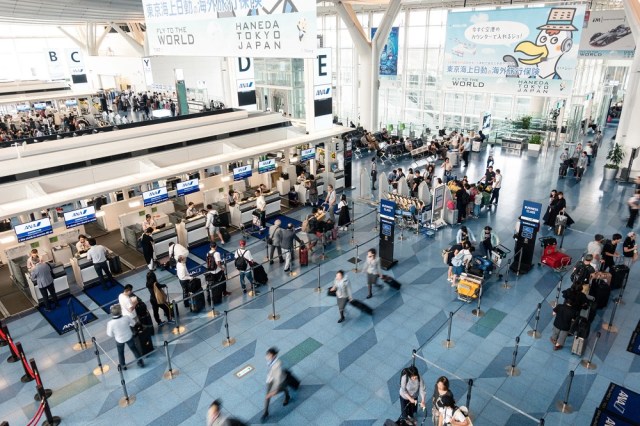
Tripling the current tax still isn’t enough for some politicians who want travelers to pay even more when flying out of Japan.
It’s looking increasingly likely that the Japanese government is going to be raising the departure tax charged to travelers flying out of the country at the earliest opportunity. Last month came reports that policymakers are considering tripling the tax, and now come reports that some travelers will likely be paying even more.
To recap, travelers are charged a departure tax, officially called the “international tourist tax” by the Japanese government, when leaving Japan. Because the departure tax is bundled in with the various other taxes and fees tacked onto the base cost of a ticket out of Japan, it’s not something that all travelers are aware of, but it is something they all pay, currently to the tune of 1,000 yen (US$6.70) per person.
Japan’s new prime minister, Sanae Takaichi, has said that she’s in favor of raising the departure tax to 3,000 yen, and with her faction, the Liberal Democratic Party, controlling the majority of the seats in Japan’s lower parliamentary house, the idea has a lot of momentum. Apparently even tripling the tax isn’t enough to satisfy the party, though, as a report by Japanese news service Kyodo says that the LDP’s Research Commission for the Establishment of a Tourism Oriented Nation is now proposing a departure tax of 5,000 yen to be levied on travelers leaving Japan in business-class or higher seats.
Policymakers looking for ways to channel more money into government coffers isn’t a new development in politics, but those pushing for the plan claim that they’re raising the departure tax to combat the ill effects of overtourism that have been occurring in Japan’s most heavily traveled areas. The extra money could be used, they say, for things such as public awareness campaigns to inform inbound foreign tourists of Japan’s etiquette expectations in public spaces, building more parking lots in areas that attract large numbers of visitors, and creating reservation systems for popular sightseeing attractions. This does, though, raise the question of whether making neighborhoods feel more like tourism facilities is really how local residents want their overtourism grievances to be addressed, especially since an additional 4,000 yen is unlikely to dissuade anyone flying business class from traveling to Japan, and so the increased departure tax is unlikely to cause any decrease in the number of foreign tourists coming to Japan.
In addition, as the tax must be paid by anyone traveling internationally and departing Japan, these increased rates would also be applied to residents of Japan at the start of their trips abroad.
Raising the departure tax would require revisions to Japan’s tax code, but if the plan progresses that could be done at the beginning of the 2026 fiscal year this coming spring, with higher departure tax rates in place before the summer travel season starts and possibly even while the cherry blossoms are still blooming in some parts of the country.
Note: This article content is being automatically formatted. For the original source formatting, visit the link below.
Original source:SoraNews24 ↗
More Japan News

A nervous Roki Sasaki steadies himself in Dodgers season debut after a shaky spring
A nervous Roki Sasaki took the mound in his season debut, knowing he needed to prove something to himself and the Los Angeles Dodgers after a shaky spring.…

The KGB’s successor is expanding its power in Putin’s Russia
Russia’s main security agency is expanding its sweeping surveillance powers, deepening the state’s reach into economic and social life to suppress any risk of dissent to President Vladimir Putin.

Legislation adopted to set numerical thresholds for dangerous driving
Application requirements for the crime of dangerous driving are vague under current rules, and many cases have ended with convictions for negligent driving instead.