
10 Great Learning Apps for Raising Bilingual Kids in Japan
Technology doesn’t have to be the bad guy. Use learning apps to support the education of your bilingual kids in Japan today.

Everybody’s talking about going analog these days, but the truth is, technology is here to stay. As busy moms, it’s hard to ditch the screen when we need to get stuff done. So what’s the trade-off? Make screens work for you. Instead of having the kids watch drivel on YouTube or Netflix, download something worthwhile. Learning apps for bilingual kids in Japan are the perfect compromise if you need a short break and want to keep your kids occupied.
Why Learning Apps?
[

](https://cdn.savvytokyo.com/app/uploads/2014/02/iStock-2189091933.jpg)Everything in moderation.
Bilingual kids in Japan have to juggle two languages: the language of instruction at school and the language at home. Bilingual brains need a lot of support in both languages and this is where learning apps shine. They can help plug the gaps and supplement learning at home and at school.
Some advantages of learning apps:
-
They are convenient. Learning can happen anywhere, anytime.
-
They are cost-effective. Some apps can be used by multiple users, which helps if you have more than one kid.
-
Many offer free trial versions so you can try before you buy.
-
They offer multi-mode learning activities (reading, listening, tracing/writing).
-
Bright visuals, fun sounds and gamification make learning attractive.
-
Because learning is tailored to the individual, each kid can work at his or her own pace.
Learning Apps for Bilingual Kids in Japan
To get you started, here are our top picks for learning apps for bilingual kids in Japan.
1. Fun! Hiragana
This interactive app lets your kid learn hiragana (a phonetic lettering system used in Japanese) by tracing characters. The app’s muted colors and cute characters are perfect for young learners. The one-time purchase price is also pretty affordable.
2. Mochikana Learn Hiragana
The kawaii (cute) mascots, sounds and graphics make learning Japanese a breeze. Mochikana unpacks hiragana, katakana (Japanese writing system for foreign words) and simple Japanese words for young learners.
3. Dr. Moku
Dr. Moku teaches Japanese using mnemonics. For example, to learn the hiragana character “ku” (く), you visualize the character as a cuckoo bird saying “Ku! Ku!” This is highly recommended for visual learners.
4. Gus on the Go
If your kid is just entering the Japanese school system, this no-frills learning app provides native-speaker pronunciation for 90 common vocabulary words. The learning app uses hiragana, katakana, and kanji, perfect for bilingual kids in Japan.
5. Lingodeer
Lingodeer is great for learning the structure of the Japanese language. This “unique grammar-focused learning system” has been developed by top language experts and engineers. It also offers native-speaker audio resources rather than a stilted AI voice.
6. Lingokids
Lingokids teaches math, science, literacy and more with over 4000 learning activities. There are no ads. It also includes popular Disney characters, which could incentivize kids to stay longer on the learning app.
7. Reading Eggs
Many moms in Japan recommend this app for homeschooling English. When your kids are in Japanese school, it’s easy for English to fall by the wayside. This app helps your kid maintain that home language. Big win: one subscription covers up to four kids!
8. Khan Academy Kids
This is the gold standard for educational apps. There are no subscription fees and no ads, making this the best app for budget-conscious parents. The app covers phonics, math and reading and is perfect for kindergarten and elementary kids.
9. Duolingo ABC
Duolingo ABC is a pretty good resource to teach your kid to read in English. It’s great at keeping young kids engaged with bite-sized lessons, fun quizzes and interactive storytelling. It can also be used offline.
10. Family Ritual
Does your kid need help learning time management? This kid-friendly app provides incentives to help kids stick to daily routines and manage transitions. It’s especially good for difficult tasks like doing homework after school.
-
Age: 2+
-
Price: Free, ¥1000-¥1200/month for premium features
-
Download here: iOS
Extra Tips for Using Learning Apps
[
](https://cdn.savvytokyo.com/app/uploads/2014/02/iStock-2188452630.jpg)© Photo by iStock/ Jacob Wackerhausen
-
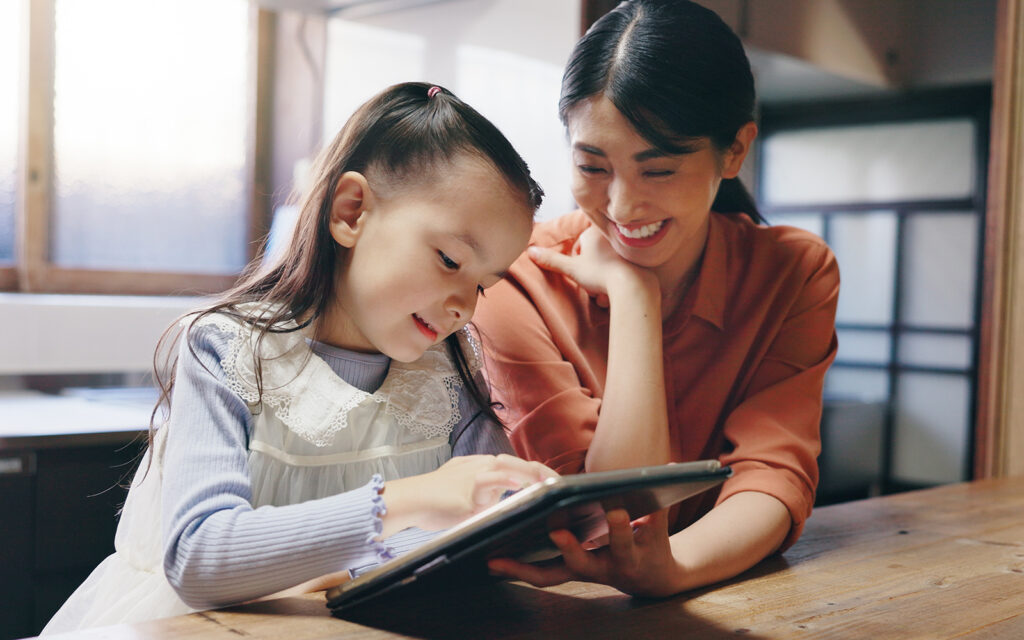
Experts warn that learning apps should supplement, not replace, offline learning.
-
Keep online activity to 10-15 minutes at a time to minimize eye strain. Experts warn that children under age 2 should not have any screen time due to the risk of developmental delays and vision problems later.
-
Choose learning apps in Japan suited to your bilingual kid’s developmental stage, learning preferences and personal interests.
-
Make sure that the learning app has parental controls and no ads.
-
If your child has ADHD or any other related attention-learning disorder, choose learning apps that are low-key and non-addictive.
If you need some guidance about offline learning activities, here are fun ways to introduce your little one to hiragana.
This post was originally written by Mia Moranza in 2014 and updated by Suzanne Bhagan in 2026.
Note: This article content is being automatically formatted. For the original source formatting, visit the link below.
Original source:Savvy Tokyo ↗
More Japan News

Government to submit draft extra budget for fiscal 2026 on June 3
Totaling over ¥3 trillion, the draft extra budget is aimed at increasing reserve funds in light of Middle East tensions.

Iran says ’low’ possibility of return to war with U.S.
The statement came a day after Iran accused the U.S. of breaching the ceasefire in place since April.

Global Leap International School: Preparing Little Ones for Big Futures
Guided by the motto “Step Beyond Wonder”, Global Leap International School shapes young minds to thrive in a more connected, inclusive future.